
Why Most Films Lose Money in the Rights Waterfall
How film revenue really flows, where margins leak via deal terms and reporting gaps, and a pre-release checklist to protect royalties.
1) The revenue-waterfall reality: gross receipts aren’t your money

Most projects don’t fail because audiences vanish—they fail because the revenue-waterfall is misunderstood. Money rarely travels in a straight line from ticket sales or a streamer license to producers. It moves through layers: exhibitor/retailer splits, platform fees, taxes, local withholding, collection agents, distributors, and only then into producer-side recoupment and profit participation. In film-finance, the headline “$X sold” is not the same as “$X received.”
Start with theatrical: cinemas keep a negotiated percentage, then distribution expenses, prints & advertising (P&A), and reserves can come off the top. For streaming/TV, the platform may pay a license fee net of delivery/QC costs, guild obligations, and sometimes marketing commitments. International adds sales agents, sub-distributors, and currency friction. This is why strong rights-management matters: the more windows (theatrical, SVOD, AVOD, TV, airlines) and territories you exploit, the more places value can leak before royalties ever reach investors and talent.
2) Where money leaks: recoupment terms, corridor deals, cross-collateralization, and reporting gaps
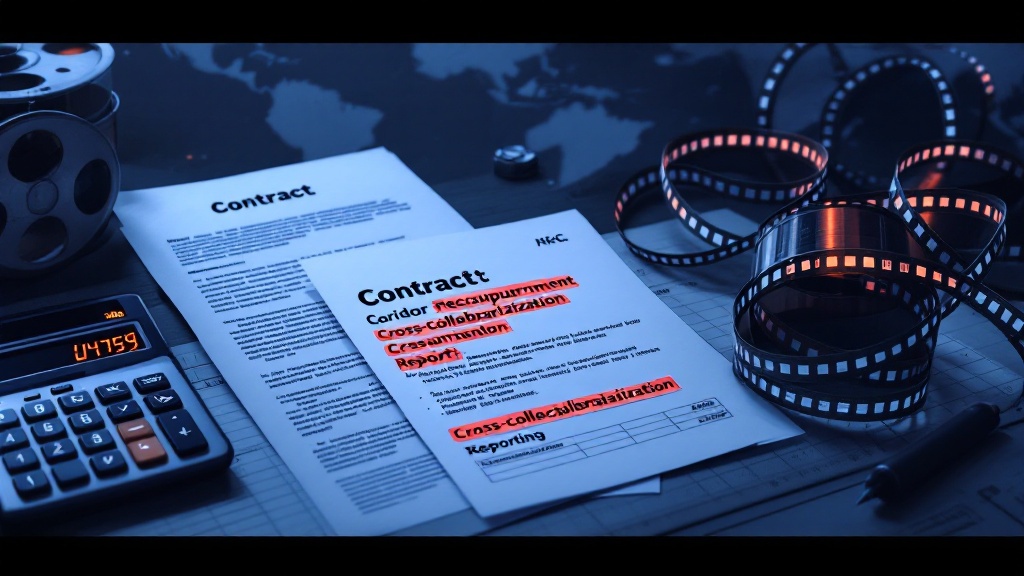
Leak #1 is deal math hidden in plain sight. In many distribution-deals, “gross” can mean “gross after X,” and “expenses” can be broad: overhead, interest, marketing, delivery, dubbing, legal, and reserves that sit for years. Recoupment order matters too—senior lenders, gap financiers, and sales advances may recoup before equity sees a dime. If you don’t model the contract language, you can’t predict investor payback or participant royalties.
Leak #2 is structural: corridor deals and cross-collateralization. A corridor may split net receipts between distributor and producer once certain thresholds are hit, but definitions of “net” and “distribution fee” can quietly shift the corridor in the distributor’s favor. Cross-collateralization can pool territories or windows so losses in one area offset gains elsewhere—great for smoothing a distributor’s risk, brutal for a title that performs well in a single market. Leak #3 is operational: inconsistent title IDs, late royalty statements, missing avails, and unmatched expense backup. These reporting gaps turn rights-management into guesswork and erode margins without anyone “stealing”—just mis-tracking.
3) Pre-release rights & royalty hygiene: a checklist that protects upside

Before release, treat rights and reporting like you treat picture lock: no surprises after distribution. A practical checklist for rights-management and royalties hygiene includes: (1) a single rights grid covering every territory/window with start/end dates, holdbacks, exclusivity, and options; (2) consistent title identifiers across deliverables, cue sheets, and accounting; (3) contract abstracts that translate legal language into a recoupment model; (4) approved expense categories with caps, audit rights, and backup requirements; (5) a delivery/QC tracker so missing assets don’t trigger penalties or delayed payments.
Operationally, require statement cadence, reserve policies, and a dispute process in every distribution-deals term sheet. Decide early whether to use a collection account manager (CAM) to centralize receipts and automate splits—especially with multiple investors and talent participations. This is where a tech-enabled backbone helps: when production assets, deal terms, and royalty reporting connect end-to-end, you reduce revenue leakage and improve forecasting. Studios built for vertical execution—like SlateBridge Entertainment’s integrated operations and rights stack—can turn the revenue-waterfall from a black box into a managed system investors can trust.